Introduction: In the rapidly growing digital economy in the Asia-Pacific region, choosing the right Malaysian server affects user experience, compliance, and costs. From a professional evaluation perspective, this article analyzes Malaysia from aspects such as latency, bandwidth, compliance, availability, scalability, and local support, to help you determine which server in Malaysia is best suited to your business needs.
Choosing a Malaysian server can result in lower regional latency, improved access speeds for local users, and better localized performance in search engines. For applications and e-commerce targeting the Malaysian or surrounding Southeast Asian markets, data centers located near users can significantly reduce page loading and API response times, thereby improving conversion rates and user satisfaction. It also facilitates the implementation of local data management and compliance strategies.
Latency is the key metric for determining whether Malaysian servers are suitable for the business. During testing, multi-point PING and Traceroute should be used to measure the average RTT from key customer groups, and fluctuations during peak times should be observed. Evaluate the interconnection with major domestic and international ISPs, the redundancy of fiber optic routes, and the stability of cross-border links, to ensure that critical services maintain acceptable latency and packet loss rates under varying traffic conditions.
Different businesses are subject to different regulations, such as personal data protection and industry oversight. When using Malaysian servers, it is necessary to verify whether the data center supports the required data residency and access control policies, as well as whether it facilitates compliance with audits, log retention, and legal requests. The compliance assessment should be carried out in conjunction with legal advisors to ensure that server selection does not pose compliance risks.
The bandwidth architecture determines how well a service performs under high concurrency and sudden traffic spikes. During evaluation, attention should be paid to the previous bandwidth limit, peak burst capacity, traffic billing mode, and whether there is bandwidth assurance (QoS). For video, live streaming, or large file transfer services, it is necessary to specifically evaluate throughput capacity and decentralized caching strategies to ensure a stable experience even during peak traffic periods.
High availability is a basic requirement for enterprise-level deployments. When choosing a Malaysian server, one should check the data center’s power and network redundancy, hardware failure recovery procedures, SLA terms, and historical availability data. At the same time, design backup and disaster recovery solutions across availability zones or regions, and conduct regular failover drills to ensure that business operations can be quickly restored in the event of an incident.
Evaluate whether the server supports on-demand scaling, auto-scaling, and load balancing. For growth-oriented businesses, flexible resource allocation and rapid scaling capabilities can reduce operational friction. The evaluation should include horizontal scaling capabilities, support for API-based automation, and compatibility with container orchestration or cloud-native services, to meet future growth or seasonal fluctuations.
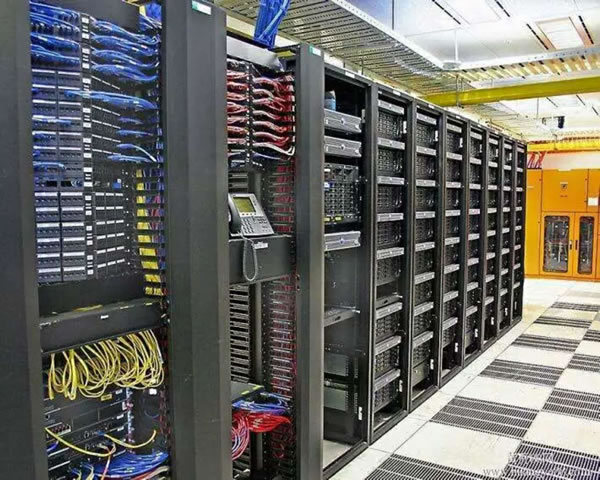
Without specifying exact prices, Malaysian servers should be evaluated from the perspective of total cost of ownership, including operational complexity, bandwidth billing models, the availability of monitoring and alerting tools, and the skill requirements for the technical team. Choose a solution that is easy to manage and has automated operation and maintenance capabilities, which can reduce human errors and maintenance costs over the long term, thereby improving cost-effectiveness.
Localized technical support is crucial for fast issue response and efficient communication. During evaluation, it is necessary to confirm the service team’s response time, support channels (tickets, phone, on-site), and language support capabilities. For businesses that require on-site maintenance or emergency troubleshooting, high-quality local support can significantly reduce downtime and improve operational reliability.
The recommended evaluation process includes network latency sampling, stress testing, availability drills, and compliance checks. First, collect latency and packet loss data using multi-region probing tools. Then, use load testing to simulate high-concurrency scenarios. Finally, conduct disaster recovery switchovers and compliance audits. Quantify various indicators based on test results to form a decision matrix, aiding in the selection of the best match Malaysian server Plan.
Determining which server in Malaysia is suitable for your business needs should be based on a multi-dimensional evaluation of factors such as latency, compliance, bandwidth, availability, scalability, and local support. It is recommended to start with a small-scale pilot and complete the aforementioned tests first, then expand in phases according to business growth plans. After considering all indicators, choose a Malaysian server solution that meets your needs in terms of performance, compliance, and operational management.
- Latest articles
- A Guide For Newbies On How To Avoid The Hong Kong Vps 10 Yuan Purchase Trap And After-sales Trap Reminder
- Let’s Look At The Performance Guarantee Of Malaysia’s Third Network Cn2 Under High Concurrency During Holidays Through A Case Study
- Where To Open Korean Native IP And Practical Advice On Choosing The Right Package
- Taiwan Server Bidirectional Cn2 Cloud Space And Public Cloud Hybrid Deployment To Achieve Seamless Business Migration
- Stimulating Battlefield Korean And Japanese Server Connection Optimization And Delay Improvement Techniques
- Comparative Evaluation: Analysis Of The Differences Between Building Native IP Addresses In Taiwan And Native IP Addresses In Other Regions
- How To Optimize Cross-border E-commerce Access Speed And Stability Through Cambodia Cn2 Return Server
- Cambodian Server Alibaba Cloud’s Practical Experience In Network Acceleration And CDN Integration
- How To Set Up A Korean Purchasing Agent Group? Precautions And Risk Control Strategies For Compliance Operations
- Practical Experience Sharing On Vps Cambodia Node Selection And Global Deployment Strategy
- Popular tags
-

Monitoring System Construction Suggestions Tell You How To Optimize Servers In Malaysia Through Indicator-driven Operation And Maintenance
this article provides suggestions for building a monitoring system and tells you how to optimize server performance and availability through indicator-driven operation and maintenance in malaysia, including key indicators, data collection, alarms and visualization strategies. -

Comparative Evaluation Of Malaysia's CN2 GIA And Other Network Services
This article conducts a comprehensive evaluation of Malaysia's CN2 GIA and other network services, analyzes its advantages and disadvantages and applicable scenarios, and helps users choose appropriate network services. -

Stability And Security Evaluation Of Malaysia Cn2 Gia Server
evaluate the stability and security of malaysia's cn2 gia server, and conduct an in-depth analysis of its performance characteristics and applicable scenarios.